


Pitching Shoulder Pain in Softball Often Starts With Workload, Not Weakness
- 3 days ago
- 3 min read
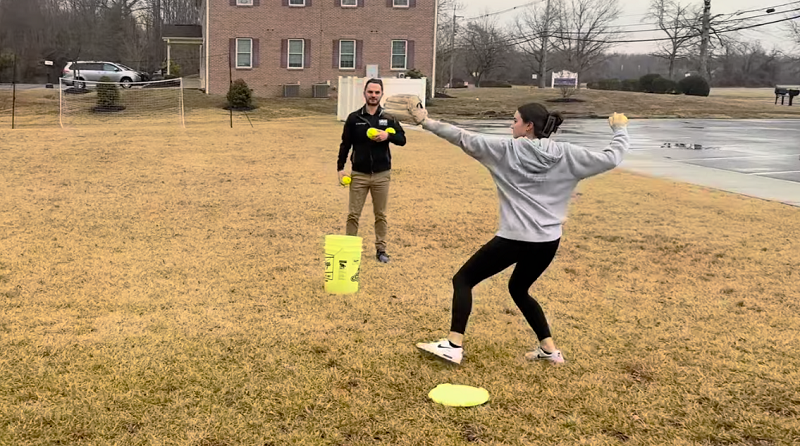
If your speed drops by Game 3, it’s not just conditioning, it’s workload, recovery, and mechanics.
Multi-game weekends are common in softball. Three games on Saturday. Two more on Sunday. By Game 3, your velocity dips. Command fades. Your shoulder feels heavy and tight.
That lingering soreness? It keeps stacking week after week.
Many athletes think pitching shoulder pain means they are weak. Most of the time, it starts with workload.
Why Pitching Shoulder Pain Builds Over a Weekend
Softball pitchers throw a high number of pitches in a short time. Even underhand pitching places stress on the shoulder complex.
Every pitch loads the rotator cuff and scapular muscles. Fatigue reduces how well those muscles stabilize the joint.
When fatigue increases:
Arm speed drops
Mechanics shift
Release point changes
Shoulder stress increases
This is where pitching shoulder pain begins. It is rarely a strength problem first. It is usually a workload and recovery problem.
Your body can handle stress. It struggles with sudden spikes in stress. Back-to-back games with limited recovery create overload. That overload shows up as soreness, tightness, or sharp pain.
The Pattern That Shows Up Before the Pain

Parents often notice speed loss before pain complaints. Coaches see command issues before injury.
By the third game:
Velocity drops
Control becomes inconsistent
Shoulder feels tired and heavy
Recovery takes longer after tournaments
This pattern matters.
Fatigue changes movement patterns. Those small changes create asymmetry. Asymmetry increases strain on specific tissues.
Over time, pitching shoulder pain becomes chronic. The athlete feels sore all week. Then she pitches again before fully recovering. The cycle repeats.
It Is Not “Just Conditioning”
Conditioning matters. But fatigue-related breakdown is more complex.
When the shoulder muscles tire:
The scapula may not stabilize properly
Internal rotation may decrease
Compensations increase at the elbow or trunk
Now the shoulder absorbs more stress than it should. If your speed drops by Game 3, that is data. It signals workload and recovery limits.
Ignoring that signal increases injury risk.
Measure Fatigue-Driven Asymmetry
You cannot fix what you cannot measure. Many athletes stretch, ice, and hope for improvement. That approach is reactive. Instead, measure how fatigue changes movement. When the body tires, asymmetries appear. One shoulder may rotate differently. One side may load differently during the stride.
These changes are subtle. They are not always visible to the naked eye. Objective biomechanical testing identifies overload patterns. It shows where stress increases under fatigue. That is how you prevent pitching shoulder pain early.
A Simple Recovery Checklist for Softball Pitchers

'Before the next tournament, review this checklist:
1. Track Pitch Volume
Count total pitches per game and per weekend. Include warm-ups.
2. Monitor Velocity Changes
A noticeable drop often signals fatigue.
3. Prioritize Sleep
Sleep drives tissue repair and nervous system recovery.
4. Restore Shoulder Mobility
Focus on gentle internal rotation and scapular control work.
5. Plan Active Recovery Days
Light movement helps circulation and reduces stiffness.
6. Watch for Lingering Soreness
If pain persists, do not push through it. Pitching shoulder pain is not a badge of honor. It is a warning sign.
How DorsaVi AMI Biomechanics Testing Helps

At Analytics for Athletes, we focus on data, not guesswork.
Our DorsaVi AMI Biomechanics Testing uses wearable sensors. These sensors analyze movement patterns in real time.
We assess:
Shoulder stability
Rotational symmetry
Load distribution
Movement efficiency
This testing identifies overload patterns before injury develops. From there, we build a sport-specific plan. The goal is to reduce stress and improve efficiency.
This approach works preseason and in-season. It helps pitchers manage workload intelligently. Instead of reacting to pitching shoulder pain, you prevent it.
Preseason and In-Season Prevention Matters
Preseason is ideal for baseline testing. It sets a performance and symmetry benchmark. In-season testing helps monitor fatigue patterns. It catches breakdown before pain escalates.
Parents gain peace of mind. Athletes gain confidence. Most importantly, shoulders stay healthier.
Protect Your Pitcher Before Pain Gets Worse

If pitching shoulder pain keeps stacking after tournaments, do not wait. Multi-game weekends are demanding. Your athlete deserves a smarter plan.
Book a DorsaVi AMI Biomechanics Testing session at Analytics for Athletes. We will measure fatigue-driven asymmetry and identify overload patterns.
Then we create a targeted strategy to reduce stress and improve performance. Stop guessing. Start measuring. Your pitcher’s shoulder will thank you next tournament.


